Last Updated on March 16, 2024 by grubdunkman
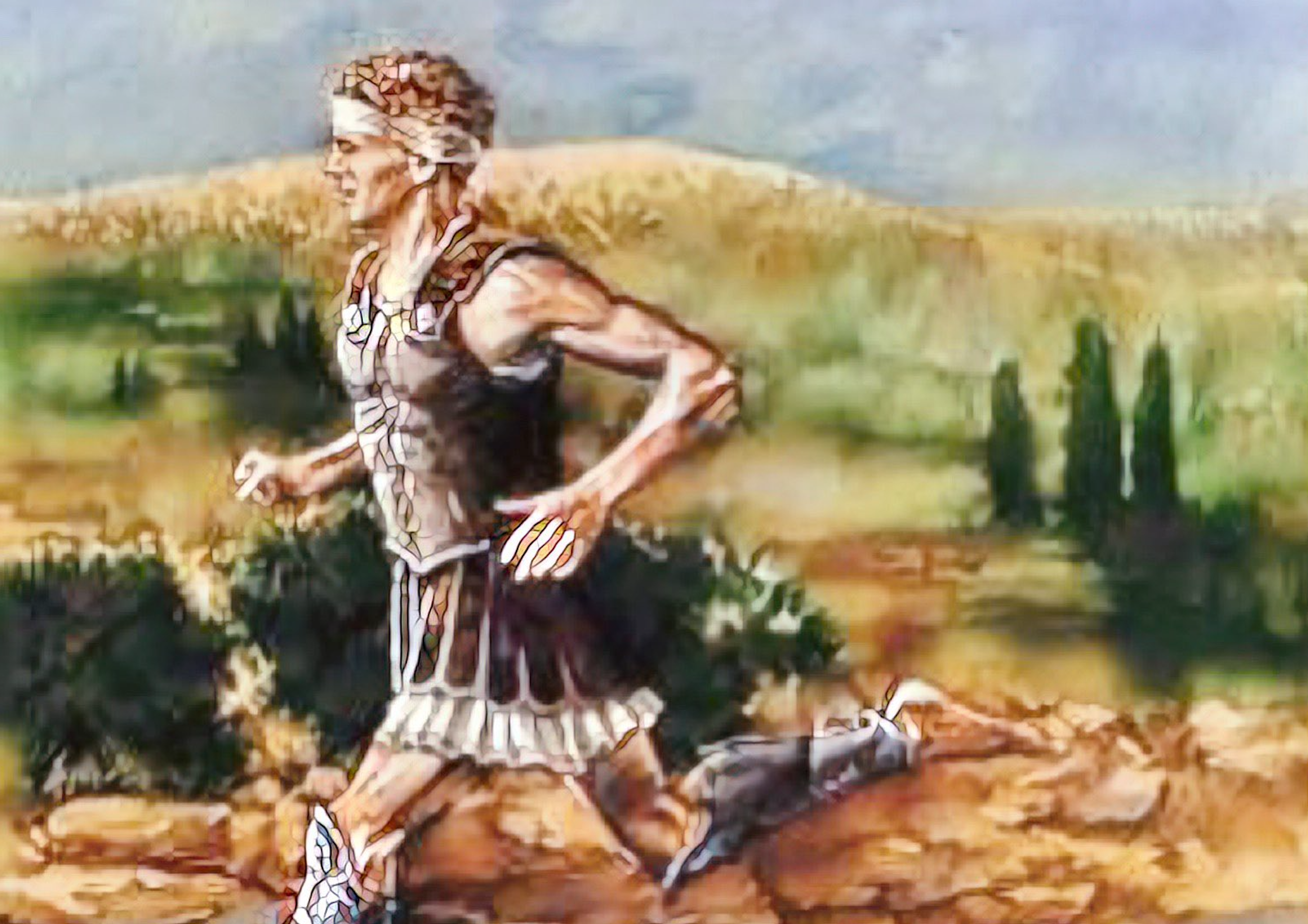
In the bustling world of ancient Greece, where messages needed to be delivered swiftly and accurately, a group of individuals quietly played a crucial role in ensuring timely communication – the “day runners” known as hēmerodromoi. While not as celebrated as the famed athletes of the time, these messengers were the lifeline of an empire. They were running across rugged terrains and treacherous paths to convey vital information.

A Race Against Time
Picture this: the year is 362 BC, and the Spartan King Agis (Agesilaos) receives alarming news of the approach of Epaminondas, a formidable Theban general. The urgency of the situation demanded swift action, and that’s where the day-runners came into play. Cretan messengers were dispatched from Tegea to Sparta, sprinting through mountainous terrain and dense forests to warn the city of impending danger.
The Cretan Connection
The Cretans were renowned for their exceptional running prowess, ingrained in their cultural tradition. Running wasn’t just a sport for them; it was a rite of passage into manhood. In Crete, the term dromeús, meaning “runner”. It was used to describe young adult male citizens. Typically beyond their late teens, who had completed their paramilitary training. They participated in drómoi, a common name for all athletic contests in Crete.
Philonides: The Legendary Day-Runner
One of the most famous Cretan day-runners was Philonides, who served as a special runner for none other than Alexander the Great. His responsibilities were not limited to delivering messages; he also played the role of a “pacer” or bēmaïstēs. Pacers like Philonides were tasked with mapping unknown regions during long-distance marches, noting topography, and recording place names. They were indispensable in ensuring that Alexander’s army could traverse unfamiliar territories with confidence.
An inscription found at the sanctuary in Olympia commemorates Philonides, proudly proclaiming him as “King Alexander’s hēmerodromos and bēmaïstēs of Asia.” This inscription attests to his remarkable running abilities and the vital role he played in the conquests of Alexander.
A Run for the Ages
Philonydes’ extraordinary feat of running 1200 stades (approximately 131 miles) in a single day from sunrise to sunset. It left an indelible mark on history. Although he may not have been a competitive athlete in the traditional sense. Still his inscriptions at Olympia speak volumes about his fame and prowess. Perhaps he sought to share in the accolades reserved for athletic heroes, or maybe he simply wished to leave a lasting legacy of his remarkable achievements.
In the world of ancient Greece, where the exchange of information could mean the difference between victory and defeat. Day runners like Philonides were unsung heroes. Their speed and endurance allowed the wheels of communication to turn smoothly, ensuring that messages of both war and peace reached their intended destinations. Names of these people may not be as familiar as those of ancient Olympic champions. Their contributions were no less significant in shaping the course of history.


Leave a Reply